1. Top API Vulnerability Patterns in 2026
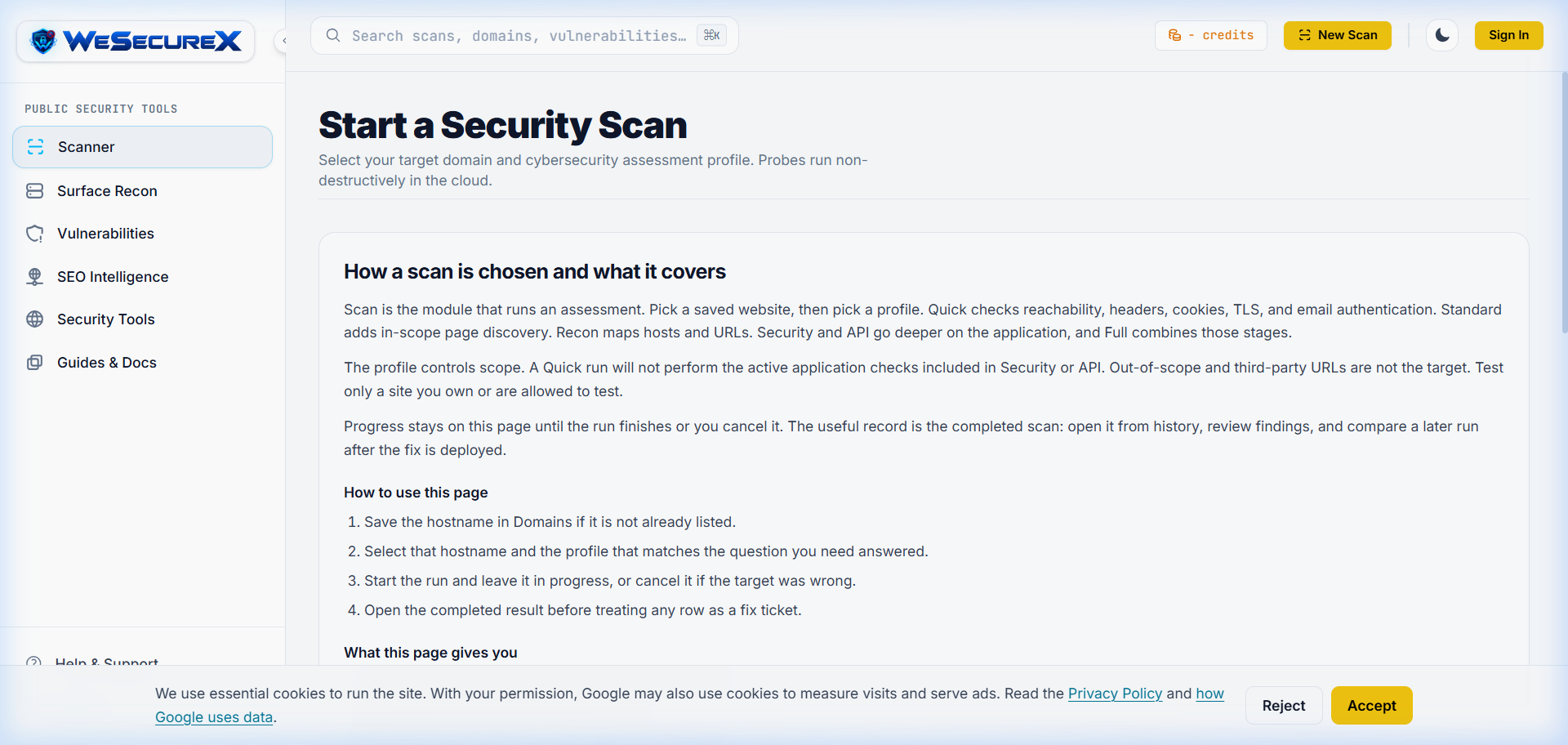
Understanding common API failure modes is essential for secure API design:
OWASP API Security Top Threat Matrix
| API Vulnerability | Vulnerability Mechanism | Engineering Defense Pattern |
|---|---|---|
| BOLA / IDOR | Manipulating resource IDs (/api/invoices/1024) to access unauthorized records | Scoping database queries strictly by authenticated user ID |
| Broken Auth | Weak JWT verification, static API keys, or missing token expiration | Using asymmetric RS256 JWTs & short token lifetimes |
| Excessive Data Exposure | Returning full database objects; relying on front-end filtering | Using explicit Data Transfer Objects (DTOs) & GraphQL field filtering |
| Unrestricted Quotas | Missing rate limits on login, OTP, or data export routes | Redis-backed sliding-window rate limiters with 429 status |
| SSRF | Server fetching user-supplied URLs without IP filtering | Validating protocols & blocking private/internal IP ranges |
Track open API security findings inside the [WeSecureX Vulnerabilities Catalog](/vulnerabilities).
2. Hardening API Code & Data Transfer Objects (DTOs)
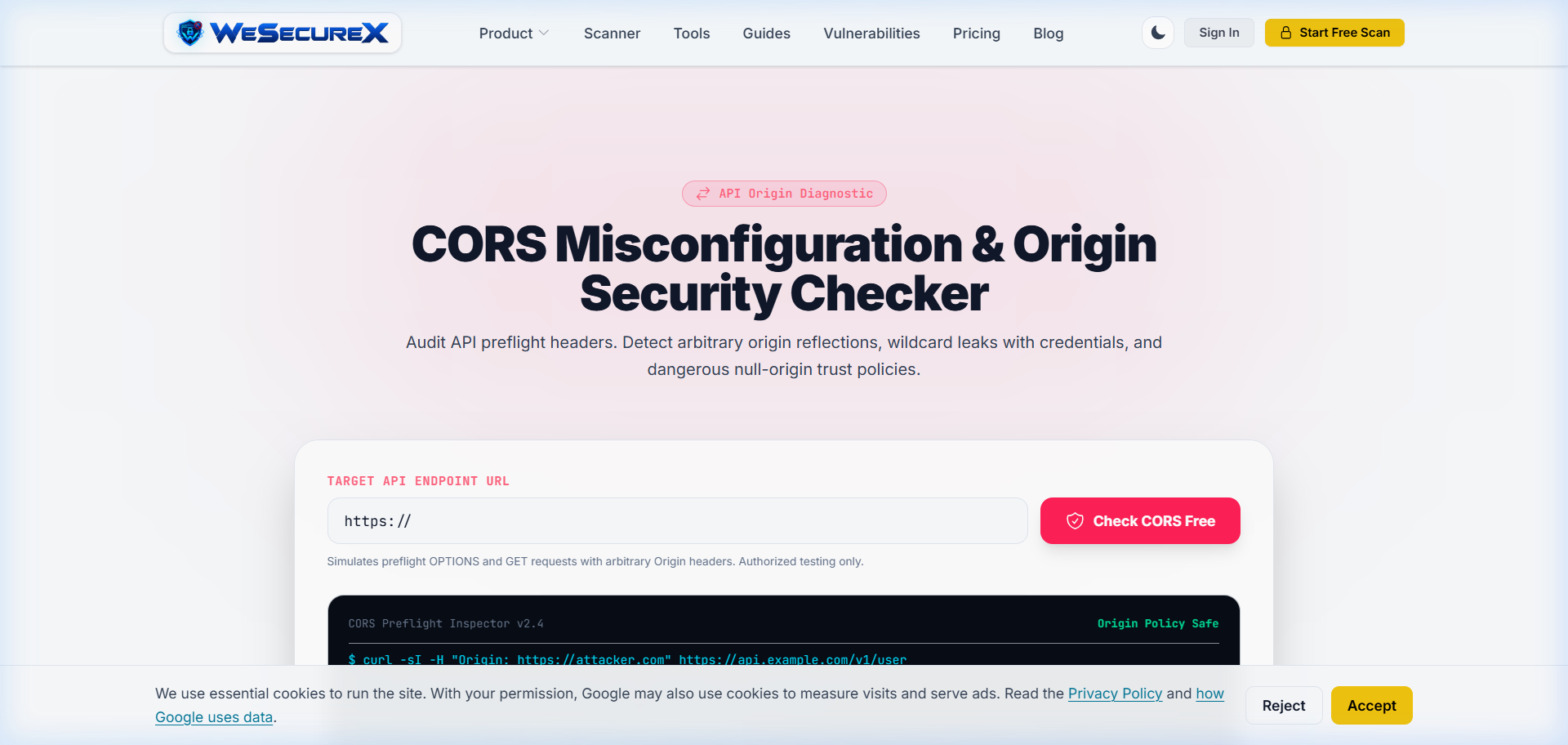
To prevent Excessive Data Exposure, APIs must never return raw database ORM entities directly to clients. If a user record contains hashed passwords, MFA secrets, or internal status flags, returning the full object relies on the front-end to filter sensitive fields - exposing data to anyone viewing network traffic in browser DevTools.
Define explicit Data Transfer Objects (DTOs) that output only necessary public fields:
// Secure API Controller Pattern in TypeScript / Prisma
import type { Request, Response } from 'express';
import { db } from '@/lib/db';

export async function getUserProfile(req: Request, res: Response) {
  const currentUserId = req.user?.id; // Extracted from verified JWT
  const targetUserId = req.params.userId;

  // Enforce BOLA Defense: Verify requester owns the record or has admin role
  if (currentUserId !== targetUserId && req.user?.role !== 'ADMIN') {
    return res.status(403).json({ error: 'Access denied: Resource ownership required' });
  }

  const user = await db.user.findUnique({
    where: { id: targetUserId },
    select: {
      id: true,
      email: true,
      name: true,
      createdAt: true,
      // Exclude sensitive internal fields: passwordHash, mfaSecret, ssn
    },
  });

  if (!user) return res.status(404).json({ error: 'User not found' });
  return res.json({ data: user });
}
GraphQL Security Architecture: Query Depth & Cost Limiting
GraphQL provides front-end developers with tremendous flexibility by allowing clients to request customized data shapes in a single HTTP request. However, this architectural flexibility introduces unique attack vectors: circular query Denial of Service (DoS), field-level authorization bypasses, and unauthorized schema introspection.
Neutralizing GraphQL Circular Query DoS
In GraphQL schemas with bidirectional relationships (e.g., author -> posts -> author -> posts), an attacker can craft a deeply nested recursive query that exhausts server memory and CPU:
# Pathological Circular Query DoS Payload
query MaliciousDoS {
  author(id: 1) {
    posts {
      author {
        posts {
          author {
            posts { id title }
          }
        }
      }
    }
  }
}
Production GraphQL Defense Standards:
- Query Depth Limiting: Enforce a maximum query depth (typically 5 to 7 levels) using
graphql-depth-limit. Reject any incoming query exceeding this threshold before execution begins. - Query Complexity & Cost Analysis: Assign computational cost points to expensive fields and reject queries that exceed a total cost budget (e.g., 500 points).
- Disable Introspection in Production: Ensure
introspection: falsein production GraphQL server configurations to prevent attackers from mapping private administrative schema types. - Field-Level Authorization Resolvers: Enforce authentication and role checks on individual field resolvers rather than relying exclusively on top-level query guards.
// Hardening Apollo Server / Yoga GraphQL in Production
import { ApolloServer } from '@apollo/server';
import depthLimit from 'graphql-depth-limit';

const server = new ApolloServer({
  typeDefs,
  resolvers,
  // Enforce maximum query nesting depth of 6
  validationRules: [depthLimit(6)],
  // Disable introspection and schema polling in production environments
  introspection: process.env.NODE_ENV !== 'production',
  formatError: (formattedError) => {
    // Prevent internal database stack traces from leaking to clients
    return { message: formattedError.message };
  },
});
Distributed Rate Limiting & Resource Quota Architecture
Without robust rate limiting, APIs are vulnerable to volumetric brute-force attacks, credential stuffing, scraping, and resource exhaustion. Simple in-memory counters fail in multi-instance cloud deployments where traffic balances across multiple container replicas.
The Redis Sliding Window Log Algorithm
Modern API gateways enforce distributed rate limiting using Redis sorted sets (ZSET), recording request timestamps to provide precision sliding-window enforcement:
- Precision Sliding Windows: Eliminates burst vulnerability at window boundaries (unlike fixed-window counters where attackers send double the rate limit across the minute boundary).
- Tiered Quotas by Client Context: Apply strict limits (e.g., 5 requests/minute) on sensitive endpoints like
/api/auth/loginand/api/auth/forgot-password, while providing higher quotas (e.g., 1,000 requests/minute) for authenticated API clients. - RFC 7231 Rate-Limit Headers: Always return standard
RateLimit-Limit,RateLimit-Remaining, andRetry-Afterheaders alongside HTTP 429 status codes.
// Distributed Redis Sliding Window Rate Limiter
import Redis from 'ioredis';
const redis = new Redis(process.env.REDIS_URL);

export async function checkRateLimit(key: string, limit: number, windowMs: number): Promise<boolean> {
  const now = Date.now();
  const windowStart = now - windowMs;

  const multi = redis.multi();
  // Remove requests outside the sliding window
  multi.zremrangebyscore(key, 0, windowStart);
  // Add current request timestamp
  multi.zadd(key, now, now.toString());
  // Count requests within the window
  multi.zcard(key);
  // Set expiry on key to prevent orphaned Redis memory
  multi.pexpire(key, windowMs);

  const results = await multi.exec();
  const requestCount = results?.[2]?.[1] as number;
  return requestCount <= limit;
}
5. Automating API Security Auditing & Endpoint Fuzzing with WeSecureX
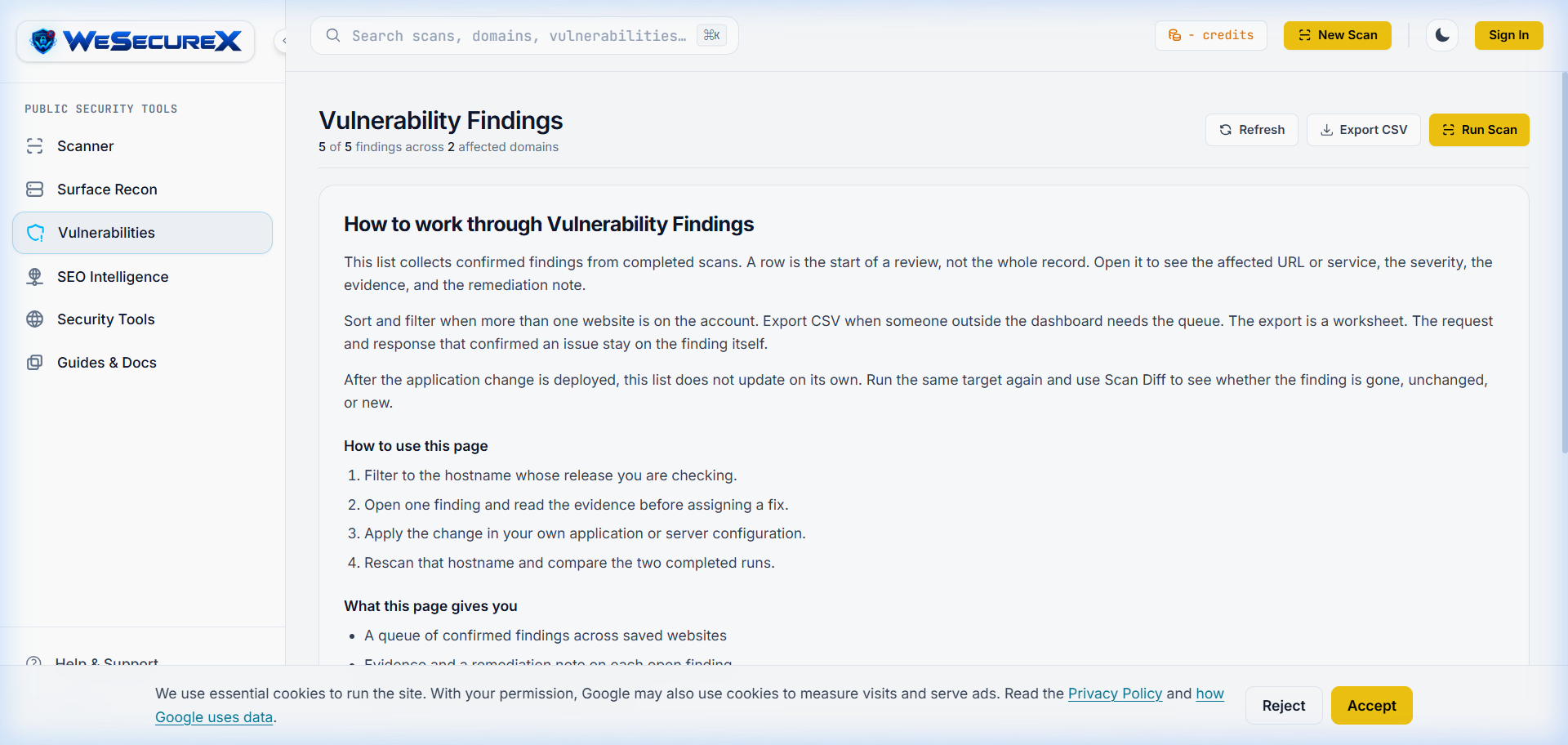
Testing APIs manually across hundreds of microservice endpoints is time-consuming and error-prone. Modern DevSecOps workflows require automated dynamic API fuzzing integrated into CI/CD pipelines.
Automated API Probing Capabilities in WeSecureX
The WeSecureX API Security Scanner provides dedicated testing workflows:
- OpenAPI & Swagger Ingestion: Simply provide your OpenAPI v3 JSON spec URL or upload a Postman collection to automatically map every path, parameter, and header.
- Automated BOLA / IDOR Probing: Generates multi-tenant test requests using dual authenticated user contexts (User A and User B) to systematically confirm whether User A can read, update, or delete User B's resources.
- Mass Assignment Fuzzing: Injects privileged payload attributes (
isAdmin,role,tier,verified) into POST and PUT requests to verify backend ORM models reject unvetted fields. - JWT Vulnerability Auditing: Tests for weak HMAC signing secrets,
alg: nonesignature bypasses, and expired token acceptance.
Audit your REST and GraphQL APIs today via the WeSecureX API Scan Engine.
# WeSecureX Automated API Audit CLI Output
$ wesecurex scan --api-spec https://api.example.com/openapi.json --auth-a "tokenA" --auth-b "tokenB"

[SPEC] Loaded 48 paths and 112 operations from OpenAPI spec
[TEST] Fuzzing BOLA on GET /api/v2/organizations/{orgId}/billing
[PROBE] Injected Token A on Org B resource (orgId: 98124)
[PASS] Server returned HTTP 403 Forbidden (BOLA Defense Verified)
[TEST] Testing Mass Assignment on PATCH /api/v2/users/me
[PROBE] Injected {"role": "SUPERADMIN"} in JSON body
[ALERT] Server accepted role escalation: HTTP 200 OK!
[VULN_ID] WSX-2026-API-0412 (CVSS v4.0: 8.8 HIGH) - Mass Assignment Vulnerability
[TICKET] Created ticket in [WeSecureX Vulnerabilities Catalog](/vulnerabilities).
Apply it with WeSecureX
WeSecureX walks the API routes it finds on your own host and tests each one for missing authentication, verbose errors, and object-level access gaps. A finding is kept only when the response confirms the gap.
Unauthenticated request to a data route
GET /api/v1/users?limit=50 HTTP/1.1
Host: api.yoursite.com
Response served without a token
HTTP/1.1 200 OK
{ "users": [ { "email": "..." }, ... ] }The finding names the route, the missing auth check, and the fields returned. A data route that answers 200 with no credential is the evidence.
Fix: require and verify a token
router.use(requireAuth);
// requireAuth rejects missing/invalid bearer tokens with 401
After the rescan
Rescan the same API host. The route now answers 401 without a token, and WeSecureX removes the finding from the report.
WeSecureX modules for this topic
Checks that belong with this topic
- Enforce object-level authorization checks directly inside all database queries.
- Never return raw database entities; use explicit Data Transfer Objects (DTOs).
- Validate API request payloads using declarative Zod schemas.
- Deploy Redis sliding-window rate limiters on public and authenticated routes.
- Block private IP ranges in webhooks to prevent SSRF vulnerabilities.
- Audit API endpoints continuously in the [[WeSecureX Vulnerabilities Catalog](/vulnerabilities)](/vulnerabilities).
Actionable Checklist
WeSecureX Platform · Scanner Engine
Automated Vulnerability Scanner
Launch targeted or full-domain security audits to detect OWASP Top 10 vulnerabilities automatically.
Includes: OWASP Top 10 automated test suites · Real-time severity scoring (CVSS v3.1) · Instant remediation code snippets
Frequently Asked Questions
BOLA occurs when an API endpoint accepts a user-controlled object identifier (e.g., `/api/user/123`) without verifying that the authenticated user actually owns or has permission to access that specific object.
No. API Gateways excel at rate limiting, TLS termination, and authentication token verification, but they rarely understand application domain logic required to perform granular object ownership checks.
Excessive Data Exposure occurs when an API endpoint returns complete data records containing sensitive fields, relying on client-side code to filter out private data before rendering.
Validate user-supplied URLs against an allowlist of permitted protocols (`http:`, `https:`) and resolve hostnames via DNS to verify that the target IP does not belong to private RFC 1918 or loopback ranges.
Automated API scanners analyze OpenAPI/Swagger specifications, executing authenticated payload checks to discover BOLA, injection, and header flaws. Audit your routes with the [WeSecureX Scanner](/scanner).
Authoritative Sources & References
- OWASP API Security Top 10OWASP (official)View Source
Related Guides
Continue exploring related technical architecture and defensive guides
API security · REST
REST API Security Best Practices for Modern Applications
Developer blueprint for securing REST APIs: BOLA/IDOR prevention patterns, asymmetric JWT validation, Redis token bucket rate limiting, and strict input DTOs.
IDOR · BOLA
Broken Access Control & IDOR: Complete Developer Guide
Insecure Direct Object References (IDOR) and Broken Access Control rank as the #1 web application risk. Learn how to scope queries and fix authz flaws.
JWT · authentication
JWT Security: Signature Pitfalls, Storage & Validation Best Practices
Hardening guide for JWTs: avoid algorithm confusion, store tokens safely, rotate refresh tokens, and validate claims the hard way - on the server.